
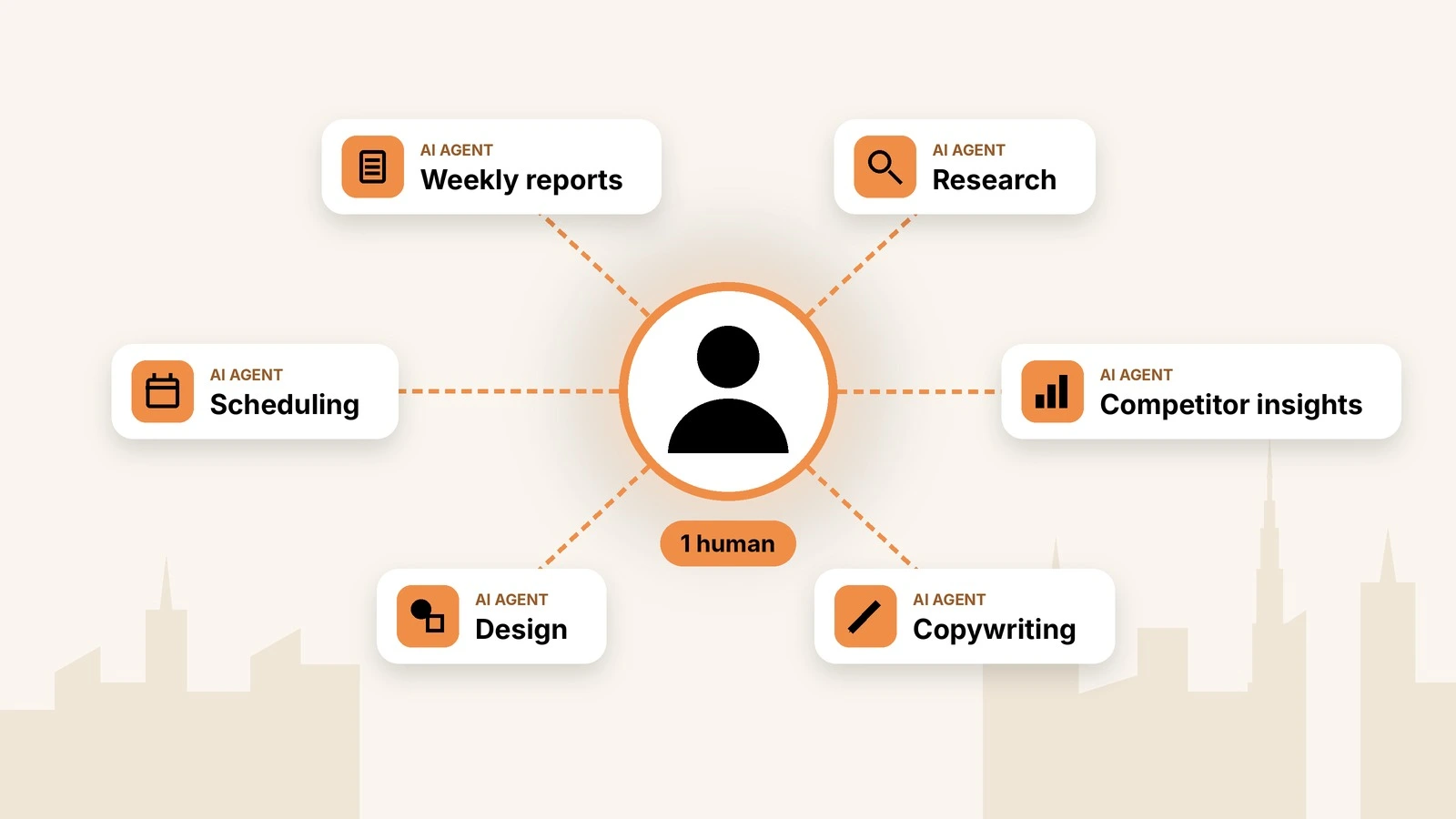
In 2024, it took five of us to run social media for our agency and our clients. A strategist, a writer, a designer, a video editor and me. Think about what that meant for a single post. A change to the offer could mean revisiting the brief, rewriting the caption and sending the design back for another round. By 2026, as we expanded from Canada into Dubai, we had changed how we worked. Each client had one point of contact, and we used AI and automation for parts of research, production and reporting. Across the team, that change now saves us about 20 hours a week.
When I look at a process now, I pay attention to the work between the jobs people are hired to do: how often someone tracks down the same information, and how far a job has gone before anyone spots a missing detail. That hidden work is where small teams lose the most time, and it is where AI helped us most. Here are five lessons from that change, and how a UAE SME could apply each one.
1. Audit the workflow before adding AI
At GM Digital, we start a social media cycle by looking at what competitors are publishing, what their audiences respond to and where there may be gaps. Social listening tools help us gather those signals. AI can organise the findings and suggest angles, but a competitor’s most-liked post tells us very little about whether the same topic will bring a client the right enquiries. Someone who understands the client still has to decide which questions deserve an answer and what the business can credibly say about them.
Weekly reports were an obvious place for us to start. We already knew what we wanted to report and how often. Now clients receive their weekly reports automatically on their phones. The part I would keep with a person is the conversation that follows. Suppose a reel gets more views than anything else that month, but most of those viewers are outside Dubai and the client serves one neighbourhood. I’d want to know whether local enquiries changed before telling the client we should make more reels like it.
Picture a Dubai distributor that spends its mornings sorting quote requests. If a customer emails a product name and a quantity but leaves out the delivery area, a tool can put the information into a standard brief, flag the missing field and draft a follow-up. The sales lead can check stock and approve the price and delivery date before anyone makes a promise to the customer.
2. Automate execution, not accountability
An old price is easy to miss when the caption reads well and the design looks finished. By then it may already be in the graphic, the caption and the scheduling tool. I’d give the person reviewing the post the current offer and permission to send the whole thing back. Otherwise you’re asking someone to approve copy they have no practical way to check.
Imagine a Dubai restaurant promoting a weekend set menu in Arabic and English. I’d put the manager’s confirmed offer next to both versions of the copy and check the details a guest will actually rely on. Is the price per person or per table? Is the offer available at every branch? Does it end on Friday night or run through Sunday? The manager confirms the terms, and a fluent reviewer checks that each version makes the same promise.
The same design choice applies to data. Decide what the workflow actually needs before connecting it to a shared inbox or a customer database. A model summarising public reviews, for instance, has little reason to see private customer correspondence. The UAE Charter for the Development and Use of Artificial Intelligence identifies responsible use, privacy and data security as policy objectives. For an SME, those priorities translate into everyday choices about access, approved inputs and who can act on an output.
3. Redesign roles around outcomes
The bigger change for us was in who owns what. Instead of each specialist owning one step of production, one person now owns the client relationship: understanding the brand, coordinating with the client and signing off on quality. The question I find more useful is not which job AI replaces, but which outcome each person is accountable for once the repetitive steps are handled.
In a small business, that might mean the sales lead stops retyping enquiries and spends the time on pricing and delivery decisions, or a marketing coordinator becomes the person who checks every claim against the approved offer. Before you change any tools, write down the decision each role owns and the point at which that person can stop the work.
4. Measure the time it takes to finish
A 2025 study in The Quarterly Journal of Economics followed 5,172 customer-support agents as a generative AI assistant was introduced. Access to the tool increased the average number of issues resolved per hour by 15%, with gains varying considerably across workers. That finding comes from one customer-support setting. Its practical value for an SME owner is the choice of measure: the study counted work resolved, rather than how quickly a first response appeared.
If I wanted to know whether AI made our content workflow faster, I’d start the clock when the brief came in and stop it when the post was approved. I’d count corrections after publication, too. A caption that takes two minutes to draft saves very little if the reviewer spends fifteen minutes figuring out where the information came from. For a distributor, I’d do the same exercise from incoming enquiry to approved quote.
Decide what counts as an error before the trial. For a team handling customer enquiries, that could mean flagging every price or delivery date that can’t be traced to an approved source. If the team clears its inbox faster but customers start calling back to correct their quotes, you’ll know where to look.
5. Run a pilot your team can reverse
Pick something your team already does every week. Take a handful of recent jobs and ask the people who did them where they spent their time and what came back for correction. Then try the new workflow on a small batch. Keep the existing approval step and make it clear when a person should take over.
Sit down with whoever reviewed that batch and open a few of the actual jobs. I’d ask what they still had to check, what they had to redo and whether they’d trust the same process next week. If the team saved time and met the standard you set, put someone in charge and keep the old process available while you build confidence. If there was extra rework, the examples should show you whether to fix the input, change the instructions or leave that particular step with a person.
If another founder asked where to start, I’d ask what their team does every Friday that still takes longer than it should. A weekly report was one answer for us. The business case gets much easier to see when you can follow one job all the way through and tell whether the new way gives people time back.
AI will not give a small team the headcount of a larger competitor. What it can do is remove the repeat work between the jobs, so the people you already have spend their time on the decisions customers actually notice. Start with one workflow, keep a person accountable for the result and measure it honestly.
Disclaimer: This is a contributed article. The views and experiences in it are the author's own and do not necessarily reflect those of Consulting Media. It is for general information only and is not business, legal, financial, data-protection or technology advice. The examples of a Dubai distributor and a Dubai restaurant are illustrations, not real cases.